
Janine is fascinated by the organic nature of gemstones, the ingrained colours and striations created over millions of years which give each individual stone its inner fire and raw intrinsic beauty. After 26 years of working with jewellery she feels its time for an easy to understand approach to gems – without the need for a degree in gemology! So here’s some information about these miracles of nature.
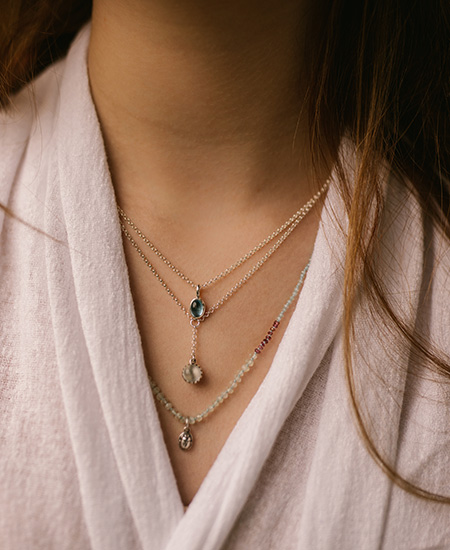
What makes a stone precious or semi precious?
All precious and semi-precious stones have something special and beautiful about them. Value is given to gemstones according to availability, aesthetics, colour, transparency, lustre, and hardness. Semi-precious stones often refer to softer stones of less value, as opposed to precious stones which are harder and have more value. This terminology however, is not entirely correct as many “semi-precious” stones are more valuable per carat than “precious” stones. It would be better to refer to them all as “gemstones”.
Weighing Gemstones
Since the beginning of time, Gemstones have been measured in “carats”. In ancient times the term was derived from the use of Carob seeds from the Carob tree, to measure gem weights (very much like the “foot” measurement). A more metric way of measuring stones is by points i.e. there are 100 points in a carat, so a 0,50ct (50 pointer) is half a carat, a 0,25ct (25 pointer) is a quarter carat, and gemstone prices are often priced “per carat”.
Availability
Availability of gemstones is not always as straight forward as what is being mined at the time. In some cases the “availability” of gemstones is controlled or ”managed”. For example, the value of a red garnet (pyrope garnet) is less than an orange garnet (spessartite). This is because the orange garnet is far less common, plus it has the added value of an intense orange colour that is highly sought after.
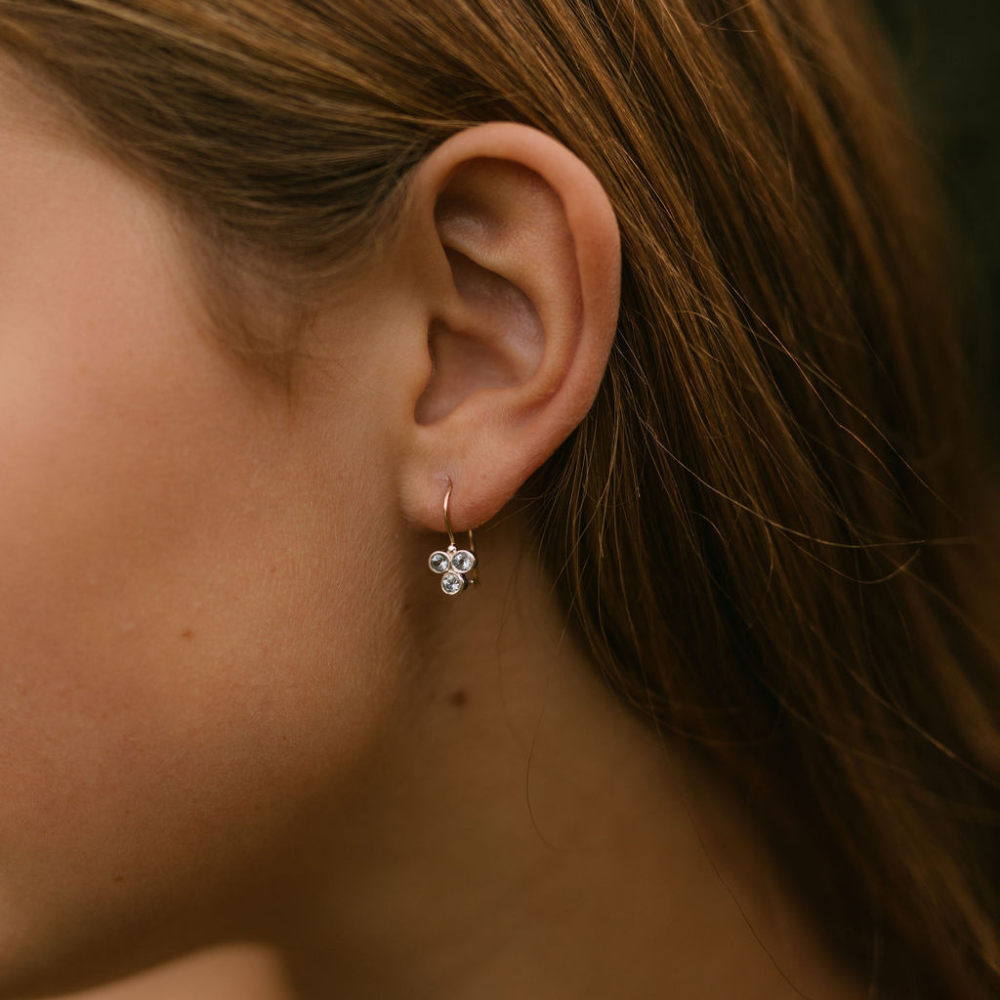
The Diamond
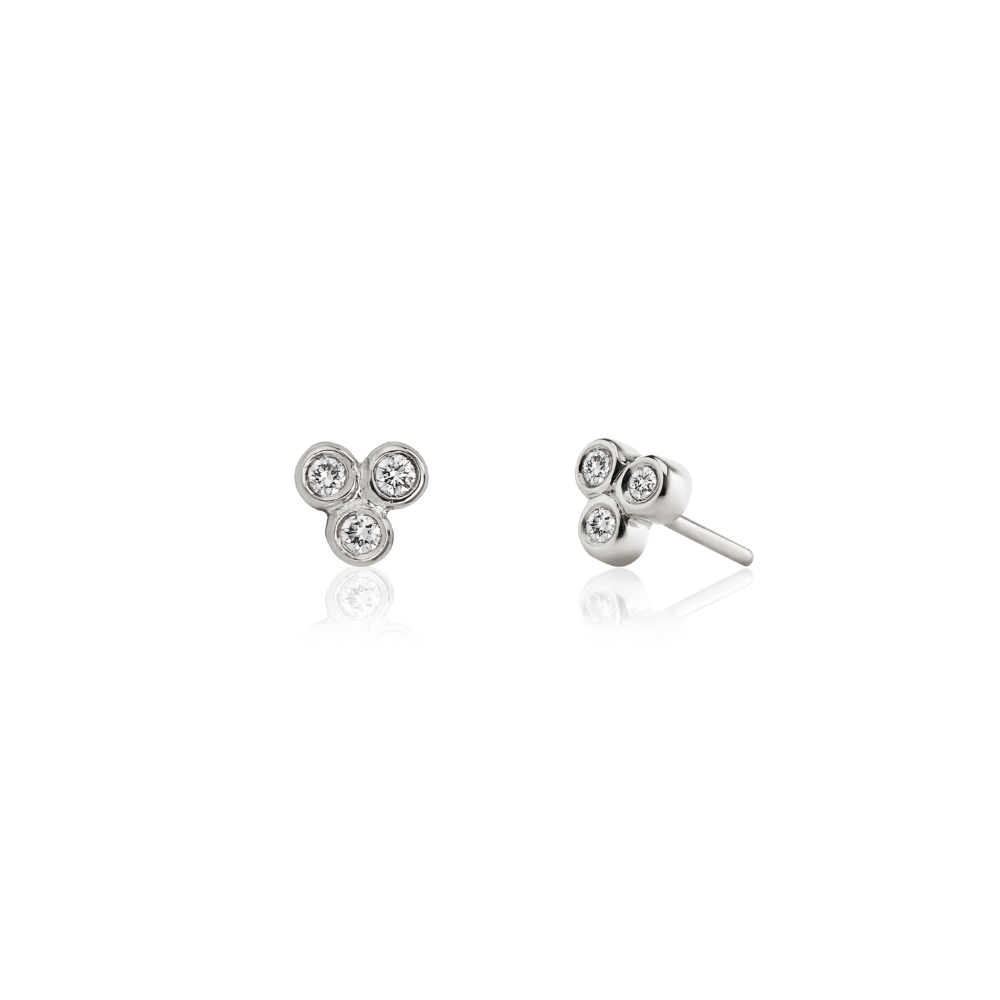
It’s name derives from the Greek word referring to hardness, Adamas, which means “unconquerable”. Diamonds are crystals of carbon that are formed in the earth’s crust over millions of years, under conditions of intense heat and pressure. There is nothing close to its hardness and only another diamond can cut a diamond. This being said, it is possible to break a diamond due to its strong cleavage, which is the ability of a crystal to “split” along certain flat planes. With care, it is possible to solder right up close to a diamond as it can withstand high temperatures. X-rays cannot permeate diamonds, which is unlike any of the synthetics produced to look like diamonds. This is often a method used to identify genuine diamonds. Because of its hardness, it is the most “brilliant” of all gemstones and has been known as the “king of gems”. A diamond’s facets have very distinctive “crisp” edges. This “fire” is what has made the diamond desirable for adornment since the beginning of time.
Are Diamonds an Investment?
About 80% of the world diamond production is “managed”. All diamonds of gem quality are sent to the Diamond Trading Company (DTC) in London, where parcels are made up for particular customers. Only a few diamond manufacturers are “invited” to buy these “lots” at fixed prices. They cannot buy part of a parcel, and it has been known that if you refuse a parcel too many times, you are never “invited” to buy again. Further sales and sorting happens by members of diamond “bourses”, clubs or wholesalers. Bourses are found in Antwerp, Amsterdam, New York, Israel, Johannesburg, London, Milan, Paris and Vienna. This is how the producers control the prices of rough diamonds in order to maintain the value of diamonds. In other words, the price of diamonds is controlled. I always think it is better to decide what you would like to spend on a stone, and then choose the stone that best fits your budget. If you are paying a commercial or retail price for something, and you wanted to sell it a year after buying it, you would not be able to resell it near the amount you paid for it. You must buy it because you love what it looks like, and that you are going to get pleasure out of wearing it or giving it to someone to mark an occasion. Due to the high price of diamonds, there are many synthetics manufactured, or doublets, which are made with the top half of the stone being diamond, and the bottom being rock crystal or glass. In my opinion, when purchasing anything of value, one should have a little bit of knowledge, and, especially in this day and age, make sure you buy from a reputable jeweller or diamond merchant, and definitely have assurance or proof that they are not conflict diamonds. If a stone is larger than a quarter carat, 0,25ct, you can insist on a certificate of authenticity. “Smalls” as they are known, are usually sold in parcels, and it would be unusual for each and everyone to be certified. However if you purchased a piece with many smalls, you could ask for a valuation certificate specifying what the piece is made up of. The Jeweller should be a member of the South African Jewellery Association. This affords you the peace of mind that they have to adhere to basic honest rules of conduct in terms of running their business and that they are not selling you conflict diamonds.
The Corundum Group
Rubies and sapphires are part of the corundum group. On the Mohs scale of hardness they are 9. The jump in hardness between corundum and diamond is much more than it seems from the scale. A diamond is 140 times as hard as corundum, but corundum is very hard wearing… seven times as hard as topaz. Corundum can be cut either en cabouchon or faceted.
The Ruby
The red corundum is called ruby, from the Greek name for red – rubeus. There is no demarcation between ruby and sapphire – they are the same chemical composition but the colour pigment influencing ruby is chrome. The most sought-after colour is “pigeon blood” red – pure red with a slight blue hue. The names “Burmese’ or ‘Siam Ruby” refer to colour and not to origin. Large rubies are very rare. Good colour rubies are one of the most expensive gems. Large rubies are rare and therefore more expensive than comparable size diamonds. Rubies are hard but brittle, so care must be taken when setting and cutting.
Large rubies are very rare. Good colour rubies are one of the most expensive gems. Large rubies are rare and therefore more expensive than comparable size diamonds. Rubies are hard but brittle, so care must be taken when setting and cutting.
Imitation rubies have been on the market since the beginning of the 1900s. They have the same chemical composition but are man-made or manufactured, their most common name being “reco-rubies” meaning reconstituted rubies. The easiest way to detect a genuine from a synthetic gem, is from the natural inclusions found in a natural ruby when the crystal grows. Many people see inclusions in stones and think that this de-values the stone. On the contrary, this would be a sure way to tell that they are genuine as opposed to synthetic. Synthetic gems appear “too good to be true” with no flaws.
The Sapphire
Any stone referred to as a sapphire is blue, all the other colours are qualified by description i.e. yellow sapphire, green sapphire, pink sapphire, violet sapphire, and red sapphires. The colouring pigment in blue sapphire is iron and titanium; in violet stones, vanadium. A small iron content results in yellow and green tones, whereas chrome produces pink. The most highly sort after colour is “cornflower blue” which used to be called “Ceylon sapphire”. Like Burma-rubies, this refers to the specific colour as opposed to where they are mined. Sapphires are more common than rubies, and as with rubies you can get “cat’s eye” sapphires. Most common deposits are found in Burma, Sri Lanka, Thailand and India. Large stones are rare, and synthetic sapphires have also been on the market since the beginning of 1900. The same methods are used in recognising a synthetic from a natural, by the inclusions and colour banding which are very specific to corundum.
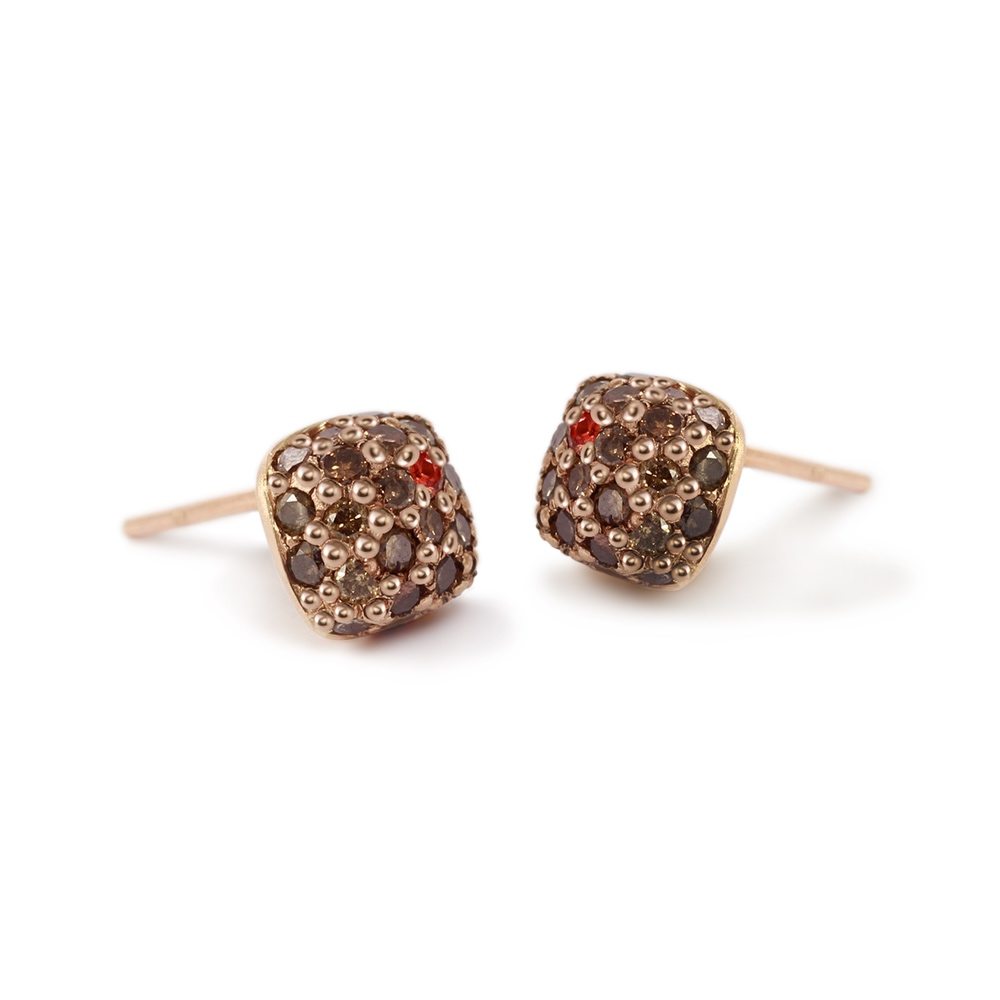
Beryl Gemstones
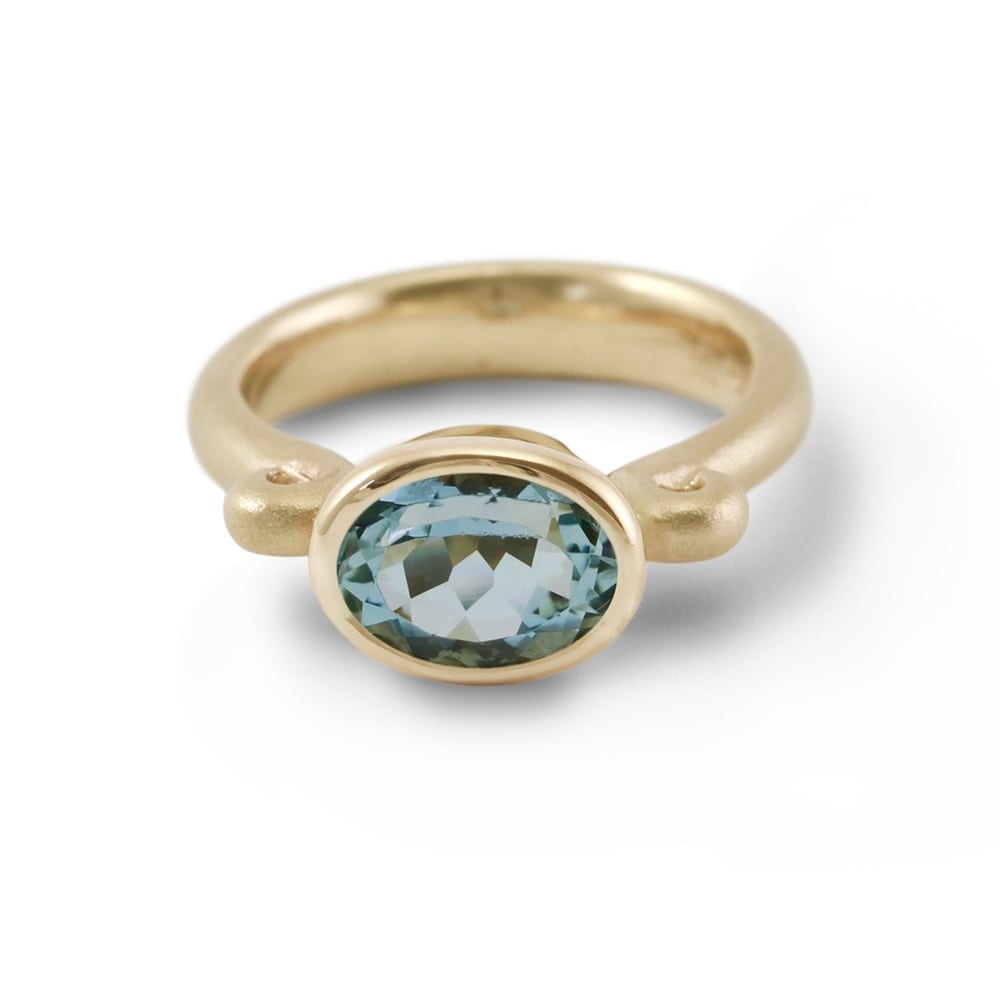
Beryl Gemstones are fascinating because there are so many colours and varieties. Within the Beryl gemstones group there are emeralds, aquamarines, yellow, yellow/green, pink, and colourless Beryl. They all have the same chemical composition with different trace elements causing the different colours. Beryls can be faceted or cut en cabouchon and is a great gemstone to consider for an engagement ring.
Besides the most famous beryl gemstone of them all, the Emerald, there is a pink Morganite, yellow Heliodor, clear Goshenite, blue Aquamarine and red Bixbite.
The Emerald
The Emerald is the most rare of the Beryl gemstones group, and therefore more expensive. One very seldom finds large, clear emeralds. There are some famous large emeralds, but these would be part of the crown jewels or national collections you find in the London Museums. They are a very specific green colour, and the term “emerald green” is not only used for gemstones. The name comes from the Greek word – Smaragdos, meaning green stone. Emeralds are very rarely free of inclusions, bubbles, healing cracks or foreign crystals. These inclusions are known as the “jardin” or” gardens”. The inclusions cause internal stresses, and combined with the brittleness of emeralds, means emeralds have to be worn with extreme care. They are sensitive to pressure and temperature change (so washing dishes is out of the question! A dishwasher must be included with the purchase of every emerald ring). Most commercially- mined emeralds are from South America. There are many synthetic emeralds on the market, as well as glass also known as “paste”, doublets, and even go to the extent of “plating emerald” onto colourless beryl.
The Aquamarine
Aquamarine is light-blue, blue and blue-green. Its name is from the Latin word meaning “Water of the Sea”. Sailors used to wear it for protection while out at sea. The darker, intense blue is the most highly sort after, and becoming more difficult to find. Large, clear, deep colour crystals are not that common any more, and if pale large stones are found, they are usually heat treated to become a more intense blue. As with emeralds, they are hard but brittle, so care must be taken when wearing them, but as they tend to be “cleaner”(fewer inclusions) than emeralds, they are not quite as easy to break. Aqua is found on most continents but mainly in South America. Smaller deposits are found in Southern Africa, Burma, USA, Russia and Australia. It is not economically viable to produce synthetic aquamarines. Most people would not know the difference between a blue topaz and an aquamarine gemstone, blue topaz being relatively inexpensive.
Morganite, Heliodor and Goshenite
Also known as “precious”, beryl also comes in pink (Morganite), golden yellow to yellow (Heliodor), yellow green and colourless (Goshenite). As with all beryl gemstones, it is hard but brittle, but because of it’s hardness, if cut well they can be incredibly beautiful stones. They are not terribly common commercially. In the jewellery industry you will often find that consumers are not familiar with these stones and their value, and will not buy them. It would take a much more “educated” jewellery buyer or someone with a keen interest in gemstones to know about Heliodors and Morganite, and the their value.
Garnet Gemstones
Garnet gemstones are not always red! This fascinating stone comes in a variety of lovely colours – and we adore using them. Here’s what you need to know…
When most people think of garnets, they think of the red stone. These are more common and usually not too expensive. But there are many different types of garnet, some which are rare and valuable. They can range from an intense orange to green in color. Garnets are cut faceted or “en cabouchon”. Pyrope garnets, are usually red, sometimes with a hint of brown. They get their name from the Greek word for “fiery” – pyrope. Pyrope gemstones can be an intense “red” and lively, and can be expensive. Especially larger stones which keep their intense red colour. Within the pyrope group, there are Rhodolite gemstones, which are a deep “mulberry” colour. These can be quite pricey, especially large clear stones.
Almandine garnets are more like the colour of red wine – red with a blue tint. Almandines are usually not expensive if the stones are small.
Spessartites go from a red-brown colour to an intense orange. The intense orange Spessartites are quite expensive and is often confused with hessonite.
Grossular Garnets, more commonly known as Tsavorites are a fiery electric emerald green colour. These are not usually found in large stones, usually under half a carat is most common. It is sourced in Kenya and Tanzania.
Hessonites are also known as the “cinnamon stone” for it’s orange-brown colour. They are easily confused with spessartite, but has a slight difference in chemical composition.
Demantoid garnets have a lemon yellow and green colour, with an intense diamond-like “fire”. Hence the name demantoid or “diamond like”. They are softer than other garnets (about 6,5-7 on the hardness scale) and are more valuable. It is quite rare to find large demantoid stones. They are often confused with emeralds, but it’s fire is a distinguishing factor. It is not a popular stone, possibly because it is not a well-liked colour. Most people would choose a peridot or the green tsavorite over a demantoid. Demantoid gemstones come from Namibia and Russia.
Moonstone and Amazonite – The Feldspar Group

Amazonite and Moonstone are quite rare and are classified under the Feldspar family of minerals. Although “common feldspar” is quite widely used as a mineral additive used in glassmaking and paint manufacture, the crystal part of the family suitable for jewellery is even rarer than Diamonds. Labradorite also falls under this family of Feldspar Gems.
Amazonite
The name derives from “Amazon”. It is a distinctive green/blue opaque stone almost always cut “en cabouchon”. It can be confused with Jade and Turquoise.
Moonstone
This is one of my favourite stones. It has a subtle beauty that grows on you. They come in shades of white, orange and green/grey. The name derives from its “sheen” that is caused by its “lamella” structure. You also find “rainbow” moonstones which have an “opalescence”. These tend to be more expensive, especially the very clean stones.
Iolite
Iolite is commonly known as “water sapphire”, because it is a strong blue/violet stone and can look very similar to a sapphire. What is very specific to Iolite is that it is has very strong “pleochroism” – meaning it can appear to be different colours when viewed at different angles. Iolite can appear almost colourless from one angle through to dark “ink” blue from another angle. This must be taken into consideration when cutting. Main deposits are found in the Far East.
Hematite
Hematite is a metallic grey colour. The name derives from the Greek name “blood”. When the stone is cut, the liquid used to cool it down is red, and if you cut it paper thin, it is red and transparent. In ancient times is was believed that the stone would stop bleeding, and was formally used as mourning jewellery. It is not often used in jewellery these days.
Jade
The name Jade goes back to the Spanish conquest of Central and South America and means “peidra de ijada” –” hip stone”, as it was believed that it would protect against and cure kidney diseases. Jade is split into two distinct groups, Jadeite and Nephrite. They have been used as gemstones for over 7000 years and were only proven to be two groups by a Frenchman in 1863. It is very difficult to tell them apart other than price differentiation. You can achieve a perfect polish on the surface of Jadeite, whereas with Nephrite, no matter how many attempts to get a perfect polish, the surface always looks a little like orange peel. In the jewellery trade, many opaque green stones are incorrectly named “Jade”. It is a very tough stone, and in ancient times it was more valuable than gold.
Peridot

Peridot comes in various greens, from vibrant yellow green to an olive green. It is one of my favourite stones, an almost “electric” green. It’s sometimes referred to as “olivine” because of its colour. It was extensively used in ancient times, brought to Europe by crusaders. It was used in churches and was very popular in the baroque period. It is one of the more expensive semi-precious stones, especially the larger stones. Even though it has such a stunning colour it does not hold a high commercial price relative to its beauty because of its softness. It has a vitreous and greasy lustre, and if it is under too much pressure, it not only cleaves but “bursts”, so care must be taken when setting and wearing it. Most of the rough is found in the Far East. Recently there have been some very good quality peridot coming out of Pakistan, which are a more lemon green in colour. In Russia there are some faceted peridot discovered in a meteorite that fell in 1749. They have very strong double refraction: which means that if you have a thick stone, doubling of the edges can be seen with the naked eye.
Tanzanite
Tanzanite is the blue version of Ziosite, which is also found in green and red. Tanzanite was first discovered in 1967 in Tanzania, hence the name. It was first used by New York jewellers Tiffany & Co, but since then a marketing genius has put it on the world map. The marketing has been so good that most people have heard of it, and would like to own one. It has an incredible intense colour, but is very soft. Other semi -precious stones which have incredible colour but are soft, do not hold a good value, but tanzanite, despite its softness is almost as expensive as a good sapphire, which is hard and can be an incredible cornflour blue. This can be due only to the marketing drive. Most tanzanite comes out of the earth brown, and are heat treated to be blue, at temperatures of 400-5C. If the blue is not intense enough, it is “colour enhanced”. There is no problem in heat enhancing stones, as long as the client who is purchasing the stone knows what they are buying. They need to know if a stone is naturally coloured or not. I would discourage anyone to wear a Tanzanite in a ring, unless it is purely a dress ring. Wear it preferably as a pendant or earrings. If you asked any setter in the trade what they thought of tanzanite, they would probably like to kill the genius that put it on the map!
Topaz
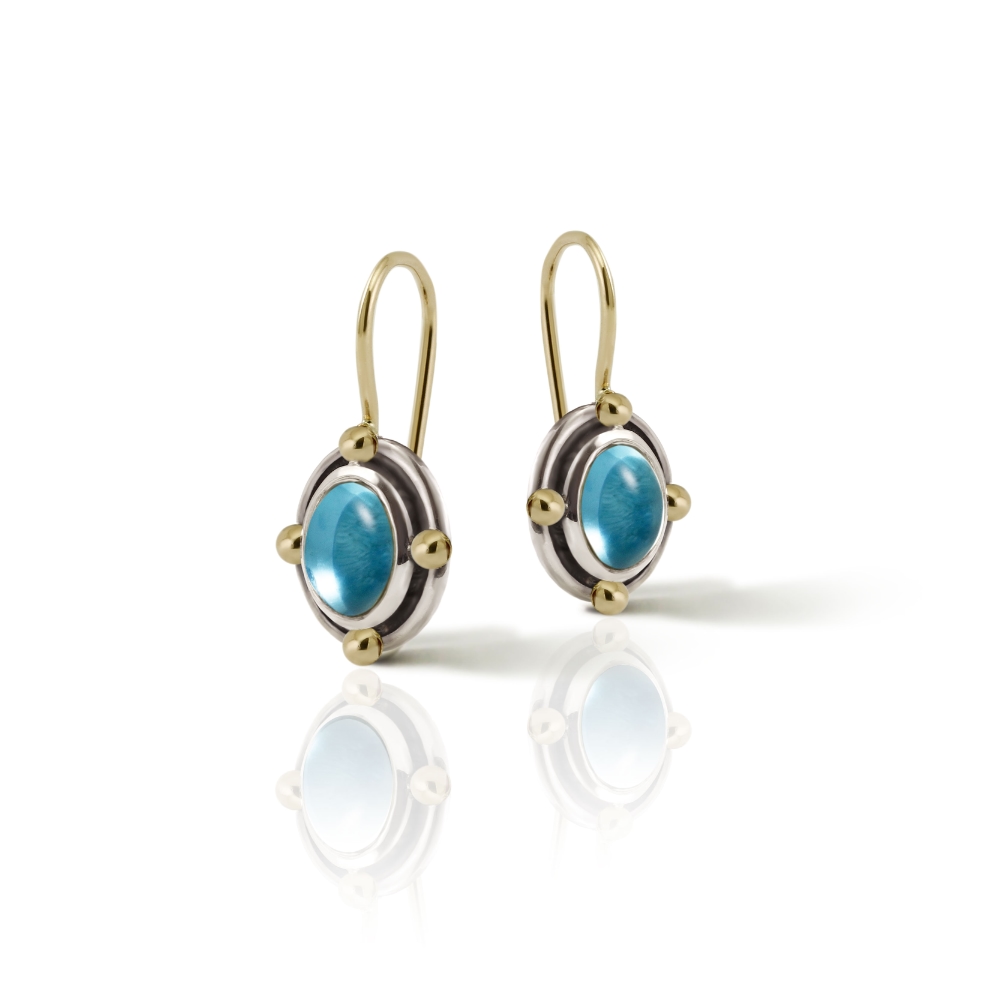
Precious topaz comes in yellow, red-brown, pinky red, pale green, colourless and light blue. The light blue stone is called “Sky Blue”, a more intense blue (which is heat-treated) is called “Swiss Blue”, and then finally the most intense teal blue stone (also heat-treated) is commonly known as “London Blue”. Most people would not be able to tell the difference between aqua and Sky Blue topaz, as they are very similar in colour, and possibly a little harder, yet is still sensitive to pressure with strong cleavage – so is a very good substitute for aquamarine. Blue is a always good seller – traditionally in the jewellery trade, blue sells the best – it is well-priced and very attractive. Keep that in mind for resale! This gemstone is found naturally in the the softer colours, such as pale green (not too different from peridot) and a very pretty salmon pink (the most valuable). Many people refer to citrine as golden topaz, or smoky quartz as smoky topaz, which is not correct, as these are also both part of the quartz family. Stones with very intense colour have been heat-treated – the very common yellow stones turn pink or blue when heated. Most topaz is mined in Brazil, and the Far East, with smaller deposits in many other parts of the world.
Tourmaline
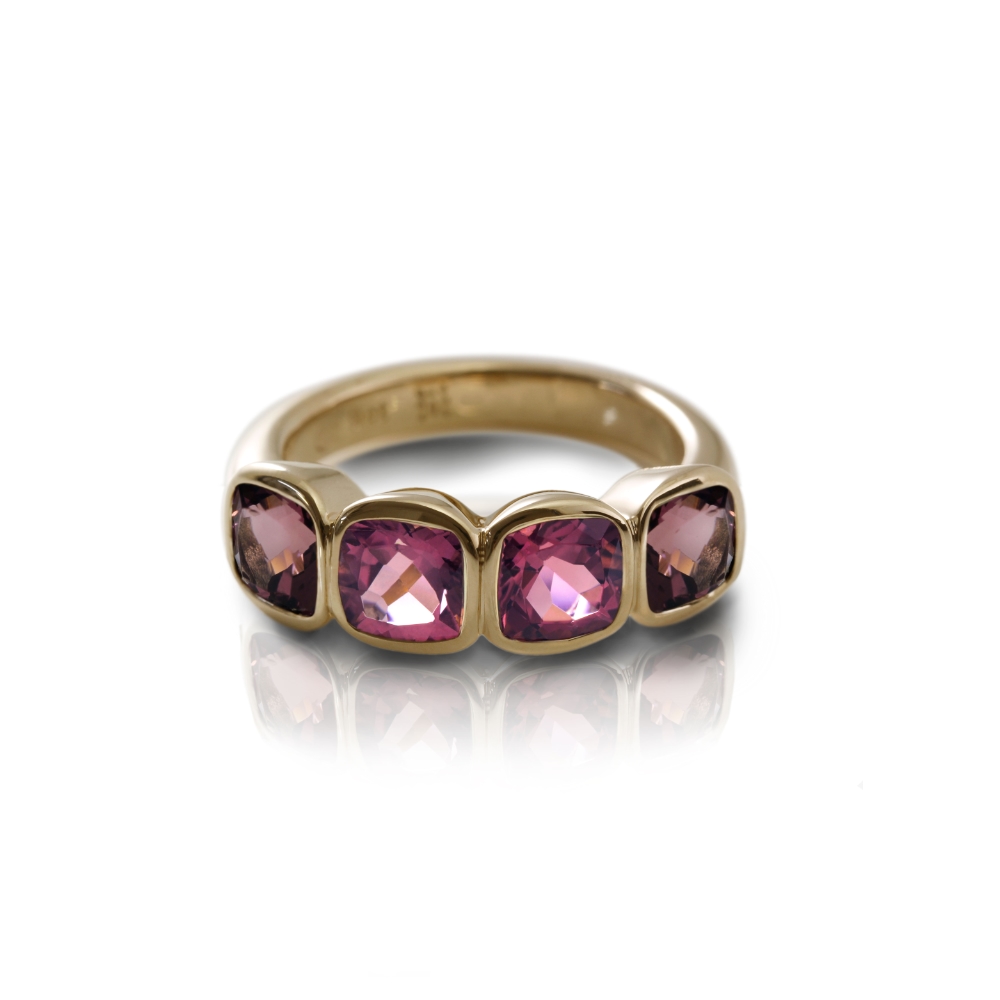
The tourmaline stone is unique because of its amazing variety of colours. As the crystal grows, it gradually changes colour. Another incredible fact about tourmaline is that depending on where it is from, the colour range changes within the crystal. Brazil produces crystals that grow from red to green on the outside rather like a watermelon, and Southern Africa produces crystals that grow from green to red on the outside. It is very unusual to find an entire crystal of tourmaline in only one colour. This is why it is very unusual and difficult to find a perfectly matching pair of tourmalines of any significant size. If there is a large piece of crystal, it would more often than not be cut into one large stone because it can be sold for much more per carat, as opposed to cutting it into a pair. This is the main reason that it is so difficult to match – bear that in mind if you have one and are trying to match it.